Showing posts with label impermanence. Show all posts

Monday, March 25, 2013

Don't get lost in the details


For 2 years in a row, the date March 9 has brought me face-to-face with the frailty of the human body.

This normally inconspicuous date has also held for me interesting coincidences.

On March 9, 2012, I awoke shortly after midnight with a splitting headache. It was the worst headache I ever had in my life. It was as though a large Bowie knife had been shoved through my skull. My vision was distorted by shimmering lights, like an aura. Because I had lived with migraines most of my life, I deduced it was just an exceptionally bad migraine. I took some Excedrin and went back to sleep.

Later that morning the headache persisted. I stayed at home and worked, but the throbbing pain in my skull was getting to me. I took a handful of aspirin later in the afternoon. The pain diminished slightly. I was beginning to notice that I had lost vision in my left peripheral field. It was the normal blind spot I get when having a migraine, so I thought.

The next day, the headache and the blind spot were still there. Perhaps this was not a migraine. I called one of those "phone a nurse" lines and described my symptoms. It was suggested that I get to an emergency room. I drove myself there. They did a CT scan. They told me I had a stroke.

On March 9, 2013, I woke up feeling fine. I went to make the coffee. I returned to my room and started my laptop, started to look through my email. When I heard the coffee had stopped brewing, I went and got a cup. I poured the soy creamer into the mug and then added the coffee like I always do every morning. I took the mug of coffee back to my room, took a sip, set the mug on the side table, then sat in the chair to resume web surfing.

Suddenly there was an intense pain in my chest. It was as if a giant hand wearing one of those metal medieval jousting gloves had gripped my chest all about the left breast and was squeezing with the pressure of an hydraulic vice. The pain radiated to my left arm, went under through the arm pit, then down my arm to my fingers. This intense pain went up the left side of my neck as well to my jaw. My breathing became shallow, I felt clammy.

I knew what was happening. I stood up, went to my medicine cabinet, grabbed an adult aspirin and chewed it. I returned to my chair and focused my mind on the pain, on my heart, on the blood vessel that was shutting down. I waited a few moments, but the pain was not subsiding. It was steady; a black knight had me in his grip and he was not letting go. Mara be damned. I was going to have to go to the emergency room. Again.

I told my roommate what I thought was happening and he and his boyfriend drove me to the emergency room. I never felt like I was going to die. But I was thinking about the irony.

Two hugely significant medical emergencies in my life, both occurring on March 9. In both incidents, I had Phô for dinner the night before. In both situations I had recently picked up my friend Curt at the airport upon his return from Malaysia where he had spent three months. And on both occasions, Curt returned from Malaysia with some type of lung infection.

Coincidences. Silly facts to mess with your mind.

At the emergency room, it had been at least an hour since the symptoms first showed and my chest was still gripped with pain. This is not a hackneyed metaphor. It literally felt as though my chest was caught in some giant vice. My blood pressure upon arrival was 188/107. They gave me a nitro. A swelling headache developed, but the chest pain had only slightly subsided. Morphine was next. At last, the pain was receding.

They drew blood to see if the tell-tale enzymes would show up indicating a heart attack. It could be severe angina or some other less serious event. These enzymes show up when there is heart tissue damage, and the only thing that causes that type of damage is a heart attack. The first draw was necessarily zero, but it would be the second draw that would reveal all.

Nammo tassa bhagavato arahato samma sambuddhasa. Say it three times. Say it six times. Say it a hundred times. I wasn't afraid. I knew I wasn't going to die. But I was embarrassed. And I was confused. I don't follow the best diet, but I eat reasonably well and I exercise a lot. My cholesterol numbers are fabulous. My EKGs have been normal. I have never felt chest pain while exercising or exerting myself. All I did was sit down after getting my coffee. Now I was annoyed. They told me I would be spending the night for observation in a regular room. Dennis and Stephen went home to get me some things.

Then the first enzyme test came back. They were canceling my room. They were sending me to ICU. The enzymes were there. I was 54 years old and I had a heart attack. My father was 58 when he had his first one. My brother was 62 I think when he had his, one that required a quad-bypass. But this couldn't be. I knew I didn't have blocked arteries. I just knew it! But what was happening?

An angiogram done two days later confirmed my belief; there was no arterial blockage. They started talking about a spasm, like a cramp in the artery that caused it to pinch shut, blocking the blood flow just as effectively if it had been blocked with plaque. But there was a problem with this diagnosis. Had it been plaque in the artery, they would cite a source, whether it was my diet or something else leading to the plaque buildup. There were procedures for this, whether surgery or angioplasty, doesn't matter - there was a protocol with that scenario.

Without the plaque, well now, they couldn't tell me what caused the spasm. And without knowing what caused the spasm, they couldn't very well tell me what to do or not do to prevent it from happening again.

It was like the stroke all over again. The stroke was caused by a blood clot - at least that's what they tell me - but they could never identify the source of the clot.

My roommate Stephen said it best: "You are a medical mystery."

Fuck that.

But now, when I chant the Five Remembrances, the significance is hard to ignore. I got things to do. And not silly things. Now the Bhaddekaratta Sutta has meaning unlike anything its held before. And yet I am still the same person. I'm not quite acting differently, not yet. But I am looking at others much differently. And I'm looking for opportunities. Opportunities to help. Opportunities to be kind. Opportunities to smile. And most important of all, opportunities to be present.

Expect some more of the same, but a little bit different.

Sunday, September 25, 2011

Observing the past, then walking away

Saturday I returned from a week in Arizona where I visited places I hadn’t seen in 30 years. Yes, things change, but how things change can be interesting. While the Bhaddekarrata suttas (MN 131, 132, 133, 134) wisely instruct us to avoid living in the past, such guidance does not equate to ignoring the past nor refusing to peruse it to discern any secrets it might reveal.

For example, one of the places I visited was Red Rock Crossing near Sedona, Arizona. I like to call Sedona the chic epicenter of new-age ethnocentrism and self-inflated egos, the home of the harmonic distortion, er, convergence. Seriously, Sedona is a beautiful place, but not my favorite spot in Arizona. It is where mysticism dies to become commercialized.

Red Rock Crossing is to the south and east of Sedona and is home to one of the most photographed views around, Cathedral Rock at Red Rock Crossing. Thirty years ago my journey to Red Rock Crossing took me along a lonely gravel road to a small park where folks brought their kids and picnics. The crossing had a gorgeous view of Cathedral Rock and was a hugely popular swimming hole. The red sandstone making the creek bottom was covered with a slick moss, which made the rock excellent for sliding along, letting the current push you through small chutes and into deep pools.

Today, the location is a state park surrounded by multi-million dollar homes all huddled together to get that “view.” Instead of a gravel road, it’s paved. The place had changed so much it was difficult for me to find the spot where we used to swim. The water wasn’t clear any more, but ruddy, the current carrying various flotsam and jetsam discarded by an egotistical society that believes that views can be owned. Joni Mitchell’s “Big Yellow Taxi” came to mind. I managed to finally reach the spot, but it wasn’t the same; the creek was lower, likely because of all those seven-figure homes with wells that were sucking the water out of the underground stream. The final insult was the new age “sorceress” there smudging a man by the waterside, undoubtedly for a hefty fee. The tone of her Tibetan chiming bowl was divine.

Other places I visited were still great. I love the atmosphere of Jerome, Arizona, and the mystical aura of the various Sinagua ruins in the national monuments that can be found in the vicinity. One spot in particular was important to me, Walnut Canyon National Monument east of Flagstaff. Here is a photo I took of my parents (both now dead) circa 1980 as they rested along the Island Trail in the park.

And here is a photo of me sitting in what I believe to be the same spot roughly 30 years later.


The former photo was taken with a Konica TC Autoreflex (which I still have) using a 50mm lens. The later was taken with a Nikon D70 with a wide-angle lens, hence the different perspective.

My homage to the past is merely that, a nod of respect toward what has happened. It is not a longing for the past, for as the Buddha taught us, the past is gone. To say that I feel nothing in terms of the past would be a lie for certain. But I don’t need to cling to it and any desire to do so is gone. Each day I capture a drop of water, and each time I give it back to the sea.

Saturday, August 28, 2010

I know you are, but what am I?


No, this is not a post about childish teasing or catty comebacks. This post is about anatta – no self. It’s an important Buddhist concept, but it’s also a beguiling one. Some confuse themselves by devoting a great deal of energy into solving the apparent riddle that if there is no self, “then who am I?” Others take the extreme, almost nihilist and literal view that no self means there is no individual identity at all, “we are all one with the trees and the molecules and the air that blows.” This can lead to the very wrong conclusion that “we don’t exist.”

As Thanissaro Bhikkhu writes in “No Self or Not Self?”:

“If there's no self, what experiences the results of kamma and takes rebirth? Second, it doesn't fit well with our own Judeo-Christian background, which assumes the existence of an eternal soul or self as a basic presupposition: If there's no self, what's the purpose of a spiritual life?”

As an aside, there’s been ongoing discussion about the “difference” between Western and Asian Buddhism, causing many to assert that we ought to stop this “meaningless” discussion and just talk about Buddhism (I’m afraid that at times I have been one of these, “can’t we just talk about Buddhism?”). But the dichotomy is real, and Thanissaro Bhikkhu touches on this when he talks about Westerners’ “Judeo-Christian background.” Folks, this perspective, this ken, is fundamentally different from the Hindu influence found in South Asia and the Confucian influence found in East Asia. These varying cultural backgrounds have real influence on how we not only perceive the world around us, but how we categorize and “understand” these concepts.

But once again, I digress.

The Buddha knew that to answer such questions like “Do I exist?” or “Is there a self?” was to lead one into a rabbit hole of circular intellectual activity. To directly address the issue of self or no-self was to continue one’s attachment to either concept, which was a source of suffering. The Buddha’s teaching is all about how to end suffering, so to dwell on issues relating to “self” would have been the antithesis of his teaching.

And yet, the Buddha was always talking about the self. Or was he?

In the Dighanaka Sutta: To LongNails (MN 74), the Buddha tells Aggivessana: “A monk whose mind is thus released does not take sides with anyone, does not dispute with anyone. He words things by means of what is said in the world but without grasping at it.”

Bhikkhu Bodhi explains that what the Buddha is telling Aggivessana is that “an arahant may use the words ‘I’ and ‘mine’ without giving rise to conceit or misconceiving them as referring to a self or ego.” The Buddha states similarly in the Samyutta Nikaya and the Digha Nikaya when he says, “These are merely names, expressions, turns of speech, designations in common use in the world, which the Tathagata uses without misapprehending them.”

Let’s make it simple. The image I selected for this post is of me when I was 4 years old. I say it is an image of “me,” when “I” was a little boy, but the boy in that photo is completely different from who “I” am today. And not just because I am 52 and have different likes and dislikes than I did then. I am so different that I am completely biologically different now from when I was 4; every single cell in my body is different now. In fact, every 7 years, my body completely rebuilds itself with new cells. So biologically speaking, I am not the same biological living mass of matter now as when I was 45.

Yet here I am. And those who have known me for more than 7 years would look at me and say, “there you are.”

This is the source of dukkha – that we are impermanent beings living in a world of impermanent phenomena. We are constantly changing, as is the world around us, and yet we speak and act as though everything was permanent. How have you been? It’s good to see you again. You’re looking the same as ever. Ah yes, it’s the same you.
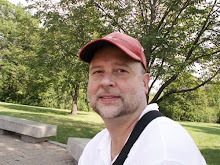
But like an arahant – despite the fact I am not and nowhere near being one – I can cultivate an attitude of ease and accept that this is how the world works while still gaining wisdom about the impermanency of self. And so yes, I tell others I am gay; I love another man who makes me feel comfortable and brings me happiness and joy, and I hope I do the same for him. I love to cook and enjoy having friends over for dinner. I am a Frank Zappa aficionado; I enjoy wine; I like to ride my bicycle along the Lake Michigan shore here in Chicago; and I am going to have fun when I go to see Scissor Sisters next week.

Tuesday, August 10, 2010

Things have changed

I want to thank the Rev. Danny Fisher for turning me on to this video. I have always loved Bob Dylan.